5G in America: What It Is, Why It Matters, and How It Will Shape the Future
Keywords -What Is 5G?, Why 5G Is a Big Deal, How 5G Helps U.S. Businesses Innovate, How 5G Benefits American Communities,
Introduction
If you’ve been hearing a lot about 5G in commercials, on your phone screen, or in tech news, you’re not alone. Across the United States, 5G networks are rolling out fast—and they’re poised to change the way we live, work, and stay connected.
But what exactly is 5G, and why is everyone talking about it? Let’s break it down in simple terms.
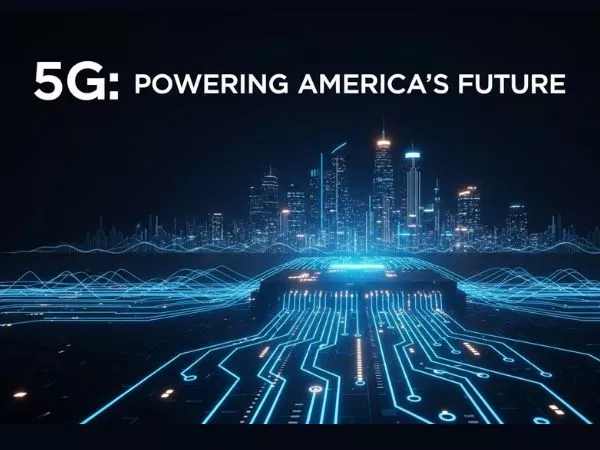
5G stands for the fifth generation of wireless technology. Think of it as the next big upgrade after 4G LTE—the system most of our phones currently use.
Here’s what 5G brings to the table:
- Significantly faster download and upload speeds
- More reliable connections, especially in crowded places
- Massive network capacity, meaning more devices can connect at once
- Ultra-low latency, or almost instant response time
These improvements open the door to technologies that require split-second communication—like autonomous cars, advanced gaming, immersive virtual reality, and live streaming with zero lag.
Why 5G Is a Big Deal
Seamless Performance with M3 Chip:
The U.S. is creating more data than ever before. With artificial intelligence, smart home devices, automation, and cloud computing taking off, we’re generating data at a scale that older networks simply can’t handle.
Here’s why 5G is becoming essential:
- It handles huge amounts of data without slowing down.
- It enables smarter, safer, and more efficient cities.
- It supports technologies that are becoming core to everyday life, from mobile banking to online learning.
- It boosts the digital economy, unlocking new industries, jobs, and innovations.
Whether it’s powering remote education, improving emergency response, or helping businesses run smarter, 5G has the potential to change the country’s entire digital landscape.
How 5G Helps U.S. Businesses Innovate
Autonomous Vehicles
For self-driving cars to work safely, they need to send and receive data instantly—detecting vehicles, pedestrians, and hazards in real time.
5G’s ultra-low latency makes that possible, creating smoother and safer autonomous mobility.
- Smart Factories
Manufacturers can connect thousands of sensors, machines, and cameras on the factory floor. This allows companies to:
- Predict equipment failures
- Automate production more efficiently
- Cut costs
- Improve workplace safety
With 5G, factories become smarter, faster, and much more productive.
- Virtual & Augmented Reality (VR/AR)
VR and AR technology can be used for:
- Employee training
- Remote repairs and maintenance
- Product design and simulation
- Sales demonstrations
Thanks to 5G’s high bandwidth, these experiences run smoothly—without lag or glitches.
- Edge Computing
Edge computing brings data processing closer to the devices generating it. With 5G powering that ecosystem, businesses can run:
- Real-time analytics
- Intelligent automation
- Security monitoring
- High-precision industrial operations
It’s the backbone of a new era of high-performance digital applications.
How 5G Benefits American Communities
Smart Cities
Cities across the U.S. are adopting 5G-enabled technology to:
- Reduce traffic congestion
- Improve air quality
- Cut energy use
- Enhance public safety
- Streamline public transportation
Real-time data helps city planners make better decisions and deliver better services.
Healthcare
5G opens up possibilities such as:
- Remote surgeries using high-definition, real-time video
- Wearable health monitors that alert doctors instantly
- Faster sharing of medical imaging and test results
- Personalized treatment plans based on continuous data
This technology improves patient care and expands access to quality healthcare—especially in rural and underserved areas.
Environment
5G plays a role in reducing emissions by powering:
- Smart buildings
- Smart grids
- Electric vehicle networks
- Remote work initiatives
- Real-time environmental monitoring
The result is more efficient resource use and less pollution.
How 5G Technology Works
5G still relies on cell sites and radio waves, but with key upgrades:
OFDM (Orthogonal Frequency Division Multiplexing)
A more advanced way of encoding data, letting 5G support higher frequencies and deliver lower latency compared to 4G.
Small Cell Towers
Instead of relying solely on tall standalone phone towers, 5G networks use small transmitters mounted on:
- Streetlights
- Buildings
- Utility poles
This allows fast, reliable coverage—even in dense urban areas.
Network Slicing
Think of it as creating multiple “mini-networks” within one physical network. Each slice can be customized for a specific purpose, such as:
- Streaming video
- Running enterprise systems
- Supporting emergency services
This means users get faster, more efficient performance on their devices.
5G vs. 4G: What’s the Difference?
| Feature | 4G / LTE | 5G |
|---|---|---|
| Speed | Up to ~100 Mbps | Up to 10 Gbps |
| Latency | ~200 ms | 1 ms |
| Capacity | Limited | Massive, supports millions of devices |
| Bandwidth | Sub-3 GHz | Up to 100 GHz (including mmWave) |
In short: 5G is dramatically faster, more responsive, and more capable.
5G Innovation in the U.S.: AWS Leading the Way
Several major American companies are teaming up with Amazon Web Services (AWS) to deploy advanced 5G infrastructure.
Verizon
As the first company to launch a commercial 5G mobile network in the U.S., Verizon uses AWS to scale faster and reduce costs through cloud-powered computing.
Ericsson
A global telecom leader using AWS Outposts to bring next-gen 5G capabilities directly to enterprise customers—especially those needing ultra-low-latency solutions.
DISH Wireless
DISH is building the U.S.’s first 100% cloud-native 5G network using AWS technologies, enabling businesses to create new 5G applications quickly and cost-effectively.
Why Some Enterprises Are Choosing Private 5G
Companies across industries—from manufacturing to logistics—are deploying their own private 5G networks because they offer:
- Stronger and more reliable connectivity than Wi-Fi
- Greater coverage across large facilities
- Lower latency for high-precision environments
- Full control over security, device access, and performance
How AWS Helps Companies Deploy Private 5G
With AWS Private 5G, businesses can:
- Connect thousands of machines and devices
- Set up a private network in days, not months
- Scale capacity instantly
- Pay only for the bandwidth they use
- Maintain tight security using existing IT policies
It’s a game-changer for companies looking to modernize operations quickly.
The Bottom Line
5G isn’t just a faster network—it’s a foundational technology that will shape America’s digital future.
From smarter cities and safer roads to innovative businesses and climate-friendly solutions, 5G brings enormous opportunity. As networks continue to expand across the country, the U.S. is positioned to lead the next wave of global technological transformation.
If you’re curious about how 5G can empower your business, exploring tools like AWS Private 5G is a great place to start.
Source
Related Searches
Ultimate Guide to Buying a Laptop
Apple Brings Final Cut Pro to Select iPads for Advanced Mobile Editing